
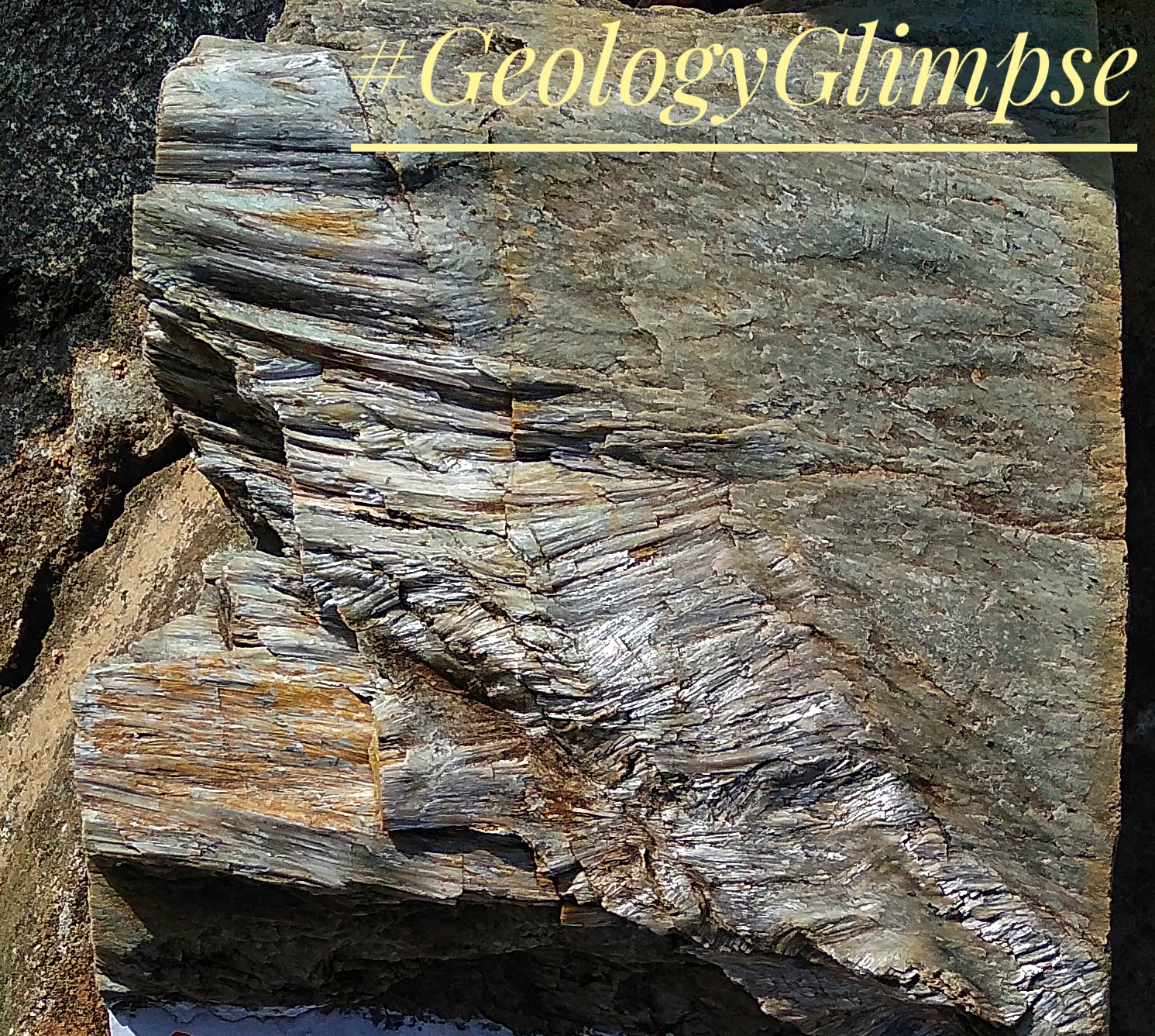
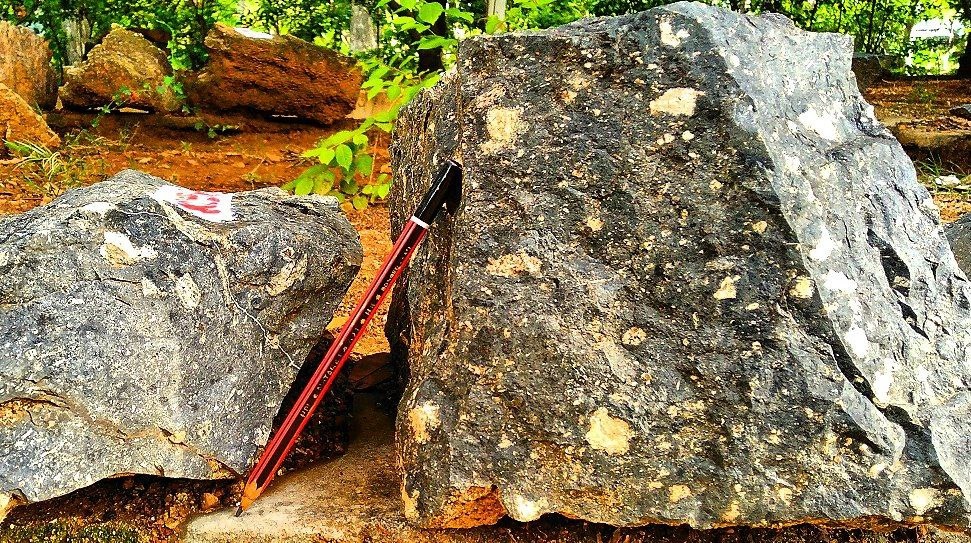
This specimen captures a striking example of an asbestos vein from the ancient Dharwar Craton—one of Earth’s oldest crustal fragments, with a history stretching back over 3.4 billion years.
The asbestos veins here are usually hosted in metamorphic rocks like amphibolites, gneisses, and schists. They are believed to have formed during the Paleoproterozoic era (~2.5 Ga), driven by tectonic movements and fluid circulation deep within the crust.
The fibrous minerals in this sample are likely chrysotile (a serpentine variety) or amphibole asbestos, each with distinct origins:
🔹 Chrysotile → formed through the metamorphism of ultramafic rocks.
🔹 Amphibole asbestos → derived from the metamorphism of mafic rocks.
Such veins not only narrate a story of deep Earth processes, but also remind us of the intricate interplay between tectonics, metamorphism, and fluid activity that shaped the Dharwar Craton.
🌍✨ A glimpse into the ancient geodynamic theater of peninsular India.
